
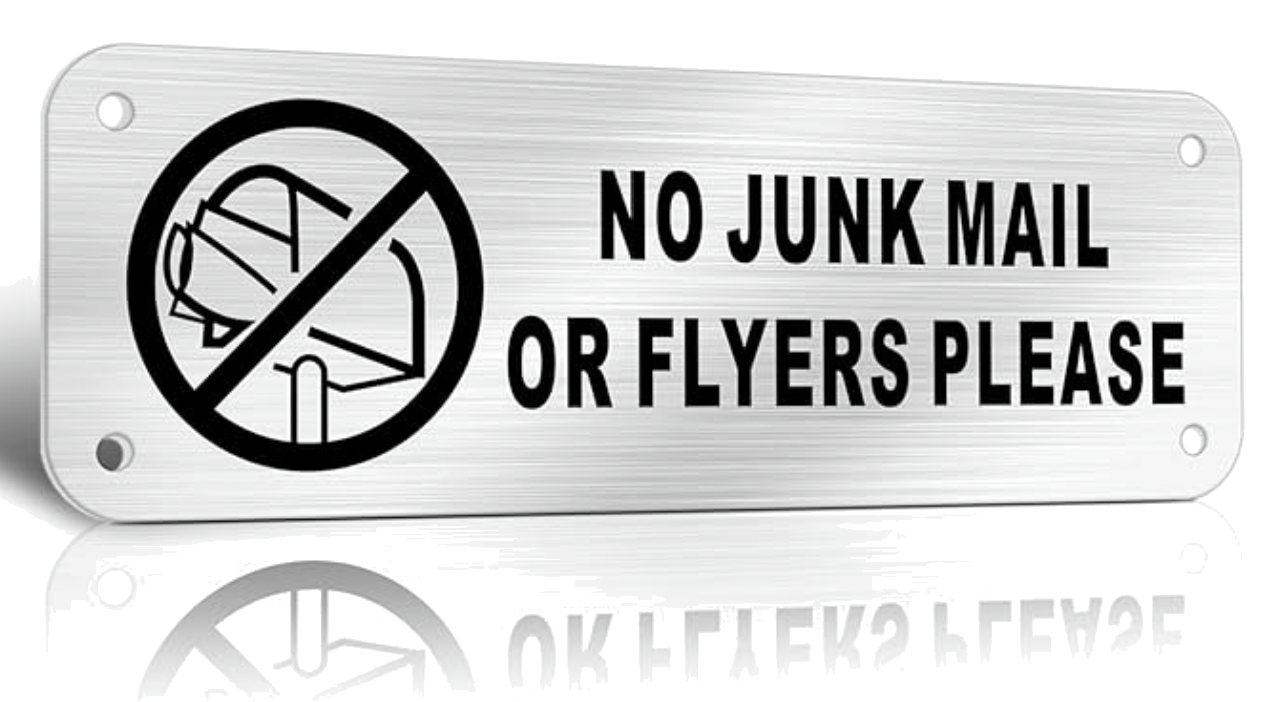
Proposal for “No Junk Mail” Waste Prevention Legislation in South Australia
Unsolicited advertising material delivered to letterboxes displaying “No Junk Mail” signage represents a persistent and avoidable waste issue in South Australia.
Despite clear and visible instructions from residents, many organisations continue to distribute printed advertising material, resulting in unnecessary environmental impact, increased waste processing costs, and community frustration.
Queensland has recognised this issue within its waste-prevention framework, identifying unwanted junk mail as avoidable waste and placing responsibility on distributors rather than households. This approach aligns with modern environmental policy principles that prioritise waste avoidance over downstream recycling.
We submit that South Australia should introduce legislation that:
- Prohibits the delivery of advertising material to letterboxes displaying “No Junk Mail” signage
- Establishes clear accountability for organisations and distributors
- Provides enforcement mechanisms and penalties for repeated non-compliance
- Reduces paper waste and associated carbon emissions at the source
Such legislation would respect individual choice, reduce environmental harm, and align South Australia with best-practice waste prevention measures already operating in other Australian jurisdictions.
This proposal does not restrict legitimate advertising activities but ensures they are conducted responsibly and in accordance with residents’ expressed wishes.
Mapping the Clauses into an Existing South Australian Act
Recommended Act
Environment Protection Act 1993 (SA)
This Act already:
- Regulates waste generation and disposal
- Establishes EPA enforcement powers
- Embeds principles of environmental harm prevention
- Allows regulation of avoidable waste streams
Best Fit Location
Insert a new Part under the waste provisions:
Part 6A – Avoidable Paper Waste (Unsolicited Advertising Material)
This avoids the need for a standalone Act and aligns junk mail with environmental protection rather than consumer regulation.
Proposed Structure within the Act
Section 3 (Interpretation) – Add Definitions
Insert definitions for:
- advertising material
- No Junk Mail sign
- distributor
New Section 71A – Prohibition on Delivery of Advertising Material
71A—Delivery of unsolicited advertising material
(1) A person must not deliver advertising material to a letterbox on which a No Junk Mail sign is displayed.
(2) A contravention of subsection (1) constitutes the generation of avoidable waste for the purposes of this Act.
Maximum penalty:
• Individual — [e.g. $750]
• Body corporate — [e.g. $5,000]
New Section 71B – Responsibility of Authorising Organisations
71B—Liability of authorising parties
(1) If advertising material is delivered in contravention of section 71A, any person or body corporate that authorised, commissioned, or benefited from the delivery is taken to have committed the offence.
(2) It is not a defence that the delivery was carried out by a contractor or third party.
New Section 71C – Repeated or Systemic Breaches
71C—Aggravated contraventions
Where a person or body corporate commits two or more contraventions within a 12-month period, the Authority may impose increased penalties or compliance requirements.
New Section 71D – Exemptions
Exemptions for:
- Addressed mail
- Government notices required by law
- Emergency or public safety communications
2. Enforcement Powers (Councils and EPA)
Shared Enforcement Model (Recommended)
Local Councils
Councils may be authorised to:
- Investigate complaints from residents
- Issue expiation notices (on-the-spot fines)
- Collect evidence (photographs, bundled materials, delivery patterns)
This mirrors existing council roles in littering and local nuisance enforcement.
Environment Protection Authority (EPA)
EPA powers to include:
- Issuing environment protection orders
- Investigating systemic or large-scale breaches
- Prosecuting repeat offenders
- Requiring corrective action plans from distributors
EPA oversight ensures enforcement targets organisations, not residents.
Evidence Standard
Evidence may include:
- Resident statements
- Photographs of material and signage
- Identifiable branding or distribution markings
- Delivery schedules or distributor contracts