
No Junk Mail Sign
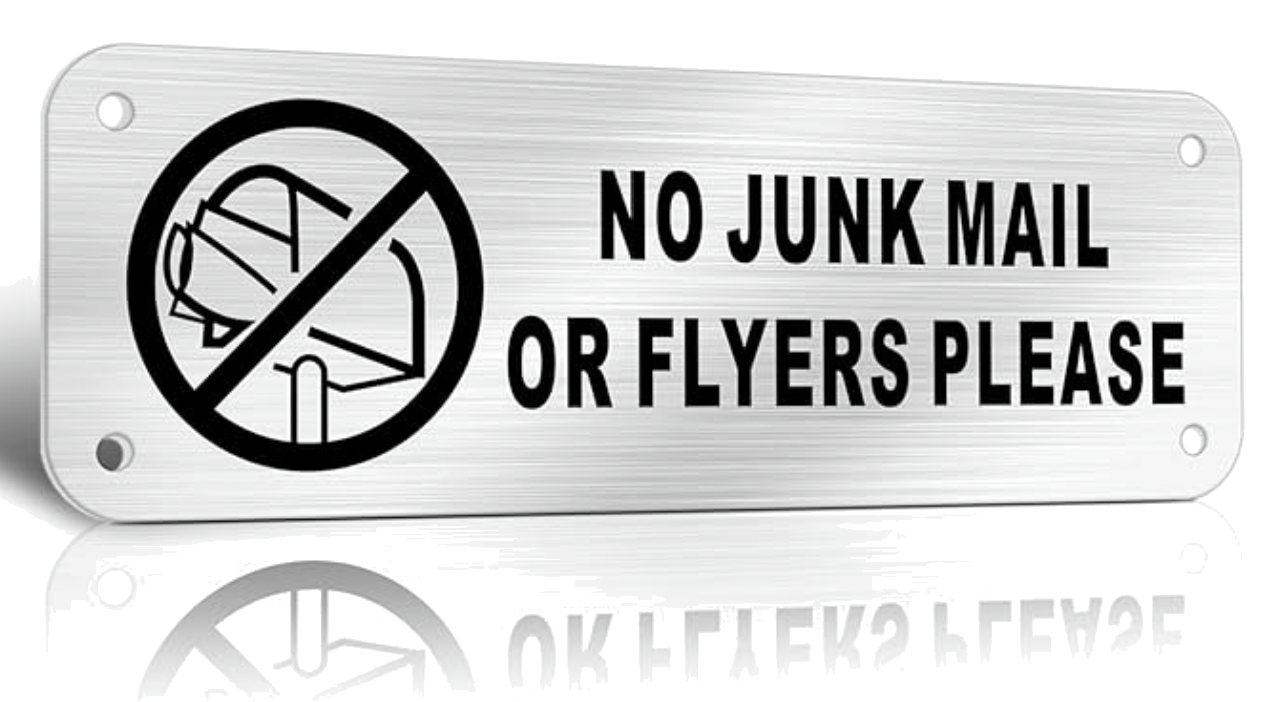
Made from high-quality aluminum, this no junk mail sign promises longevity and resilience. Aluminum's natural resistance to rust ensures that the sign remains in pristine condition, making it suitable for outdoor use in all weather conditions.
Click here to buy from Amazon
Different Type Of Junk Mail
Junk mail generally falls into two categories: electronic and physical.
Electronic junk mail, such as spam emails, texts, and instant messages, is already regulated in Australia under the Spam Act 2003, which sets rules for how digital marketing can be sent and gives consumers protections and opt-out rights.
Physical junk mail, however, including unaddressed advertising material delivered to letterboxes, is not covered by the same legislation.
Our campaign focuses specifically on this gap, advocating for stronger protections and clearer rules around physical junk mail to give households greater control over what is delivered to their homes.
Junk Mail Statistics
Key Statistics
- The average Australian household receives around 12 pieces of unaddressed mail every week.
- Australia Post research found Australians receive just under 12 unaddressed items per household per week, including catalogues and advertising flyers.
- In 2020, Australia used an estimated 568,000 tonnes of paper for catalogues alone.
- Much of this advertising material is discarded almost immediately, with consumer experts noting many households move junk mail “straight into the recycle bin.”
- The Australian junk mail industry was worth more than $428 million for unaddressed mail and $1.54 billion for addressed direct mail.
- According to industry data, letterbox networks reach more than 28 million Australians.
Environmental Impact
- Junk mail contributes significantly to paper waste, resource consumption, and landfill pressure. Environmental groups describe unsolicited advertising as a “massive and unnecessary waste of paper.”
- Overflowing letterboxes can also create street litter and increase contamination in recycling streams.
- Australia sends millions of tonnes of waste to landfill each year, with paper and packaging forming a substantial component of household waste streams.
Recent Poll Results
Below is the results of our recent poll "What type of flyers do you receive"
Data was calculated over a six month period.
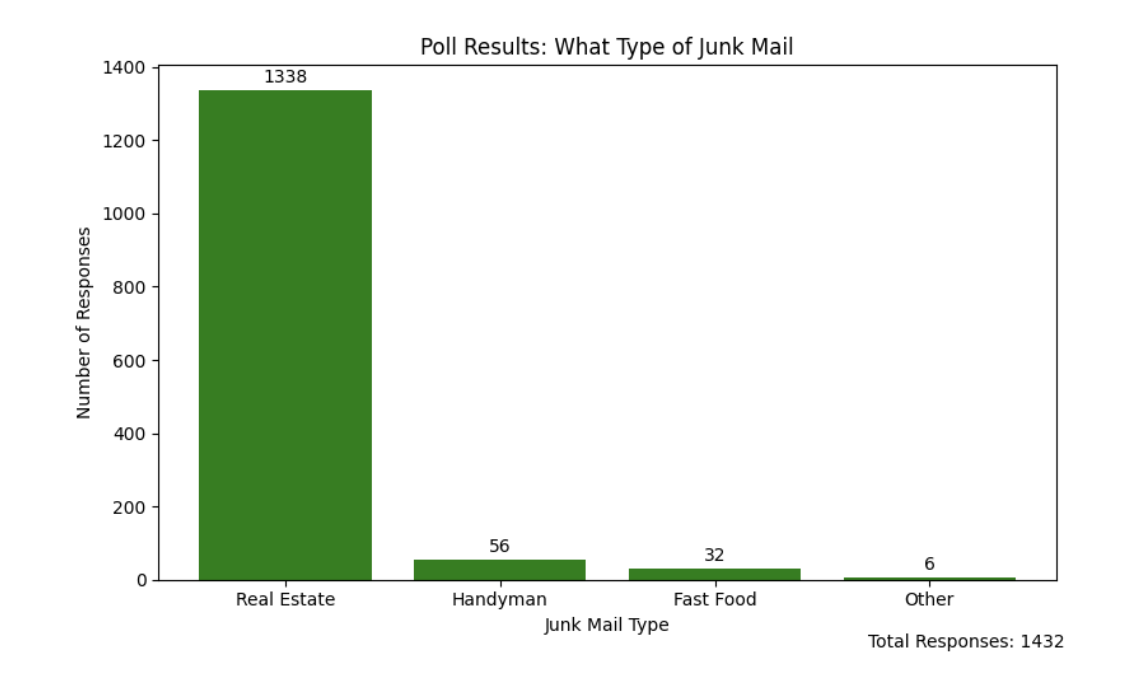
NOTE: Data is from residence who have "No Junk Mail" on letter boxes
No Junk Mail Campaign (SA)
Every day across South Australia, households clearly display “No Junk Mail” signs, yet thousands of unwanted flyers, catalogues, and advertisements still end up in letterboxes. It’s waste. This isn’t just an inconvenience.
The Problem
Despite clear instructions from residents, many organisations continue to ignore “No Junk Mail” signs. The result is:
- Unnecessary paper waste
- Increased landfill and recycling contamination
- Higher carbon emissions from printing and delivery
- Disrespect for individual choice
Australians are doing their part to reduce waste, but without enforceable rules, the burden unfairly falls on households.
A Proven Solution
Queensland already recognises junk mail as an environmental issue.
Under its waste-prevention framework, unwanted advertising material is treated as avoidable waste, placing responsibility on distributors, not residents.
South Australia can do the same.
What We’re Calling For
We are advocating for new South Australian legislation that:
- Makes it unlawful to deliver advertising material to letterboxes displaying “No Junk Mail”
- Holds organisations accountable for repeated breaches
- Reduces paper waste at the source
- Aligns SA with best-practice environmental policy already in place elsewhere in Australia
Why It Matters
This isn’t about stopping businesses from advertising, it’s about respect, responsibility, and sustainability.
If a household says no, that choice should be protected by law.
Join the Movement
Help us push for sensible, modern legislation that: 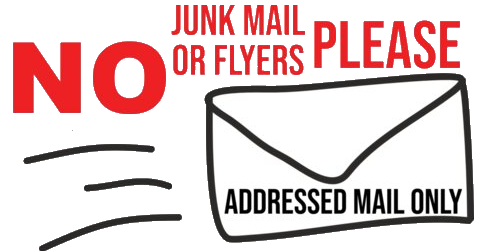
- Respects residents
- Reduces environmental harm
- Prevents waste before it’s created
No Junk Mail should mean No Junk Mail.
What are we proposing?
To read our proposal, click here.
Our Petition
Every day, our mailboxes are filled with junk we never asked for, wasting paper, harming the environment, and adding stress to our lives. This constant flood of unwanted mail comes at a real cost to our planet and our communities.
By signing this petition for No Junk Mail Legislation, you’re standing up for your right to say no to waste and yes to a cleaner, more sustainable future. Add your name today and help protect our homes, our time, and our environment.
Click here to sign the petition.
What your saying!
- Ineffectiveness of Signs: Many users state that despite clearly visible "No Junk Mail" signs, they continue to receive unwanted advertising material.
- Specific Culprits: Real estate agents and local newspapers are frequently cited as the main offenders for ignoring signs.
- Distributor Behavior: Reports suggest that delivery agents are often given large volumes of flyers and instructed to deliver to as many houses as possible, ignoring restrictions.
- Overflowing Boxes: In some cases, unsolicited material causes letterboxes to overflow, leading to issues with receiving actual, important mail.
- Proposed Solutions: Some residents recommend contacting specific companies, while others suggest placing, but not destroying, items back in the mail.
- Successful Signage: Adhesive, high-visibility "No Junk Mail" stickers are generally well-received for reducing, though not always eliminating, junk mail.
- Environmental concerns regarding paper waste.
- Physical damage to mailboxes or, in some cases, to the mail itself.
- Difficulties in identifying which company is responsible for the distribution to stop it.